What Is Montmorency Tart Cherry? The Variety Behind the Research
By Amanda Bryne8 min read
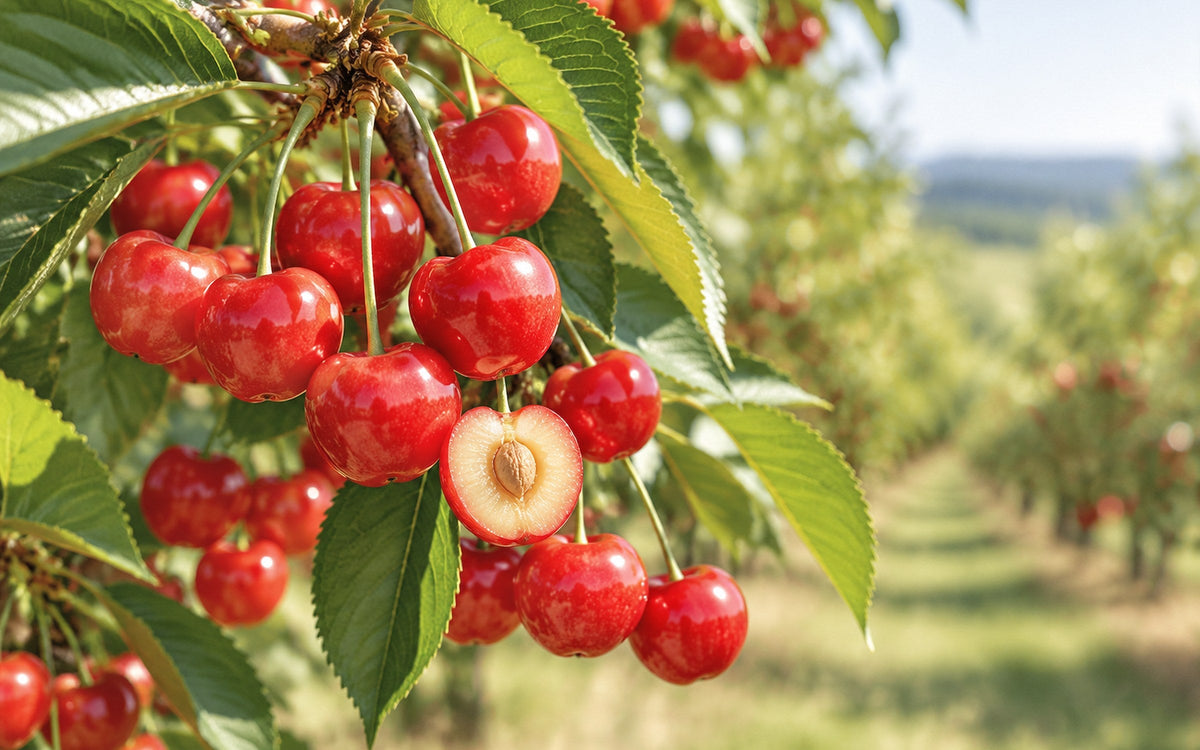
Montmorency is a variety of sour cherry, the species Prunus cerasus. It has a thin, bright red skin, pale flesh and clear, tart juice. It is the tart cherry grown most in North America, and it is the variety behind most of the published research on tart cherry and recovery, sleep and uric acid.
If you have seen "tart cherry" on a juice bottle or a supplement label in the US, it was almost certainly Montmorency. The name comes from the Montmorency valley north of Paris, where the cherry was grown as far back as the 1700s.
This article covers where Montmorency comes from, what is actually inside the fruit, why researchers keep choosing it, and what that means when you pick a tart cherry product.
Key studies at a glance
| Study | Who took part | What they took | How long | What the researchers found |
|---|---|---|---|---|
|
Burkhardt et al. 2001, J Agric Food Chem PMID: 11600041 |
Fresh-frozen Montmorency and Balaton cherries, lab analysis | No one; the fruit itself was measured | One-time lab measurement | About 13.5 ng of melatonin per gram in Montmorency, roughly 6 times more than Balaton |
|
Ou et al. 2012, J Food Sci PMID: 23163942 |
Tart cherry juice concentrate, frozen, canned and dried cherries, lab analysis | No one; the products were compared | One-time lab comparison | Per serving, frozen cherries had the most anthocyanins and juice concentrate the most total phenolics |
|
Keane et al. 2016, Eur J Nutr PMID: 26163338 |
12 healthy men | 30 mL or 60 mL Montmorency concentrate, one serving | Blood sampled over 8 hours | Two cherry phenolic acids appeared in the blood, peaking 1 to 2 hours after drinking |
|
Levers et al. 2015, J Int Soc Sports Nutr PMID: 26578852 |
23 resistance-trained men | 480 mg powdered Montmorency tart cherry in capsules a day | 10 days | Less thigh soreness and less strength loss after heavy squats than placebo |
|
Howatson et al. 2012, Eur J Nutr PMID: 22038497 |
20 healthy adults | Tart cherry juice concentrate daily | 7 days | More melatonin in the urine, longer total sleep and better sleep efficiency than placebo |
|
Keane et al. 2018, Scand J Med Sci Sports PMID: 29566443 |
10 trained cyclists | 30 mL Montmorency concentrate, one serving | Tested 90 minutes later | About 10% more power in a 60-second all-out sprint; systolic blood pressure 5 mmHg lower than placebo |
Where the Montmorency cherry comes from
Montmorency is a French cherry. According to the Wikipedia entry on the variety, it is named after Montmorency, a suburb of Paris, and has been cultivated there since the 18th century. From France it travelled to North America, where it found the cold winters and short summers it likes.
Today the biggest plantings are around Grand Traverse Bay in Michigan, in Door County, Wisconsin, and in parts of Ontario. Michigan alone produces around 90,000 tons a year. The fruit is harvested in a short summer window. Because the cherries are soft and spoil fast, nearly the whole crop goes to processing soon after picking: frozen fruit, juice, juice concentrate, dried cherries and powders. That is why you rarely see Montmorency cherries fresh in a supermarket, even in cherry country.
Amarelle, not Morello: what the colors tell you
Sour cherries fall into two groups. Morello types have dark red skin, dark red flesh and dark juice. Amarelle types have bright red skin, pale yellow flesh and clear juice. Montmorency is an amarelle. Cut one open and the inside is yellowish, not purple.
This matters when you look at pictures of "tart cherry" products. A deep purple, almost black cherry in a product photo is usually a sweet cherry or a Morello type, not Montmorency. The real fruit is a lighter, brighter red on the outside and pale within.
The red in the skin comes from anthocyanins, the plant pigments that make cherries, blueberries and red cabbage colored. A 2004 analysis from Oregon State University, published in the Journal of Food Science, compared one sour cherry (Montmorency) with three sweet cherry varieties. The sweet Bing cherry had more anthocyanins, but Montmorency had the highest total phenolics and the highest antioxidant activity of the four. The same study found that the phenolics and anthocyanins in every variety were concentrated in the skin. In Montmorency, the main anthocyanin is cyanidin 3-glucosylrutinoside, according to a 2009 study in Food Chemistry that profiled frozen, dried and concentrated Montmorency products.
What is inside a Montmorency cherry
Beyond the pigments, Montmorency carries a mix of plant compounds that researchers group under the word polyphenols. Flavanols are the largest class in Montmorency, which sets it apart from sweet cherries, where hydroxycinnamic acids dominate. The fruit also contains small amounts of melatonin, the hormone your body makes to signal sleep. A 2001 lab analysis from the University of Texas Health Science Center measured about 13.5 nanograms per gram of fresh-frozen Montmorency cherries, roughly six times the level in the Balaton variety, and neither the orchard nor the harvest date changed it much. That melatonin content is the reason the first sleep studies on tart cherry were done at all.
The numbers on the label follow from this. Because the active compounds sit in the skin and pulp rather than the juice alone, a product that uses the whole pressed fruit carries more of them than a clear juice. And because a single cherry is small and mostly water, supplements describe their dose as a fruit equivalent, the amount of whole tart cherry a serving represents, rather than as a count of cherries.
At least some of these compounds reach the bloodstream. In a 2016 Northumbria University study, 12 healthy men drank a single 30 mL or 60 mL serving of Montmorency concentrate, and two phenolic acids from the cherry, protocatechuic and vanillic acid, showed up in their blood, peaking 1 to 2 hours later with traces still there at 8 hours. It was a small study of blood levels, not of any health outcome.
None of these compounds is unique to Montmorency. What is unusual is the combination and the concentration in a fruit that is already processed into shelf-stable forms at scale. That made it an easy ingredient for researchers to source consistently, and the research followed.
Why most of the research uses Montmorency
When scientists test tart cherry, they test Montmorency far more than any other variety. A 2026 scoping review in Frontiers in Nutrition found 28 published clinical trials on Montmorency tart cherry and exercise in healthy adults. Of the 14 trials that measured strength recovery after exercise, 7 reported faster recovery with Montmorency. Of 10 that measured performance, 4 reported an improvement. The authors called the evidence preliminary and noted that most trials were small and short. That review was funded by the Cherry Marketing Institute, which is worth knowing when you read it.
The individual studies give you the texture. At Texas A&M, 23 resistance-trained men took either placebo capsules or 480 mg a day of powdered Montmorency tart cherry for 10 days around a heavy squat session. The cherry group reported less thigh soreness and lost less strength in the two days after. In the UK, 10 trained cyclists who drank 30 mL of Montmorency concentrate had systolic blood pressure about 5 mmHg lower 90 minutes later and produced about 10 percent more peak power in a 60-second sprint than on placebo.
On sleep, 20 healthy adults who drank Montmorency juice concentrate for 7 days had higher melatonin in their urine and spent more time asleep with better sleep efficiency than on placebo. A small pilot in adults over 50 with insomnia found that 240 mL of Montmorency juice twice a day for 2 weeks added 84 minutes of sleep time measured by polysomnography, in the 8 people who completed it.
On uric acid, a 2025 placebo-controlled crossover trial in 10 healthy adults used 500 mg a day of a standardized tart cherry extract for 4 weeks. Plasma urate was 37.4 percent lower and C-reactive protein, a marker of inflammation, 23 percent lower than on placebo. Ten people is a small trial, and the extract was a European tart cherry, not specifically Montmorency. Still, it is the kind of standardized extract study the field needs more of. You can read more in our article on tart cherry and uric acid.
The Australian Institute of Sport, which grades sports supplements by evidence, lists fruit-derived polyphenols including cherries in its Group B: "emerging and/or mixed scientific support, deserving of consideration in specific populations or situations." That is a fair summary. Not proven, not dismissed, and worth attention.
Does the variety actually matter?
Yes, for a practical reason. The studies above were done on Montmorency, so Montmorency is the variety the findings apply to. A different cherry has a different mix of anthocyanins and polyphenols. A label that just says "cherry" or "cherry flavor" could be sweet cherry, which is a different species (Prunus avium) with a different chemistry. The AIS makes the same point in its framework: evidence for a fruit may only apply to the specific variety tested.
The second reason is processing. Anthocyanins are fragile. They degrade with heat and with long storage. The 2004 Oregon State analysis found that more than 75 percent of the anthocyanins in frozen Bing cherries were gone after six months at minus 23 degrees Celsius, and that canning moved about half the anthocyanins out of the fruit and into the syrup. A 2012 comparison of processed tart cherry products in the same journal points the same way: per serving, frozen cherries had the most anthocyanins, juice concentrate had the most total phenolics and proanthocyanidins, and the authors concluded that processing changed both the compounds and their activity in lab tests. So the variety is the starting point, and what happens to it between the orchard and the capsule decides how much of that starting point you actually get. We go into that in cold-pressed vs heat-dried tart cherry.
What to look for on a label
If you want the cherry the research was done on, look for three things. First, the word Montmorency, or at least "tart cherry (Prunus cerasus)". Second, a statement that the product is standardized for anthocyanins, the pigments most of the research points to. Third, a processing method that avoids heat. A product that passes all three is at least made from the right fruit, handled in a way that keeps the pigments intact. Our buying guide walks through the rest of the label.
Where Nature Heart fits
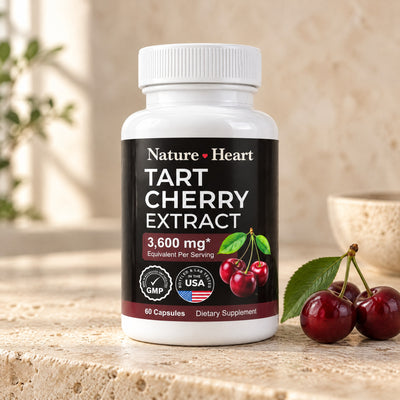
Nature Heart Cold-Pressed Tart Cherry Extract is made from Montmorency tart cherry, the variety described in this article. It is cold-pressed rather than heat-dried and standardized for anthocyanins. Two capsules a day give 3,600 mg equivalent of tart cherry. The capsule is a two-piece vegetable hard capsule filled with cherry powder, with no fillers, flow agents or colors. Every batch is third-party lab tested before shipping.
It is one ingredient and one variety, which keeps things simple. If it does not suit you, there is a 90-day money-back guarantee. If you want the fruit the studies used, in a form that holds up on a shelf, that is what we built it for.
Frequently Asked Questions
Is Montmorency the same as tart cherry?
Montmorency is one variety of tart cherry, the species Prunus cerasus. It is the variety grown most in North America and the one used in most of the published tart cherry studies. Other tart cherry varieties exist, such as the darker Morello types, but when a US label says tart cherry it usually means Montmorency.
What makes Montmorency cherries red?
The red comes from anthocyanins, plant pigments that sit mostly in the skin. In Montmorency the main one is cyanidin 3-glucosylrutinoside. These pigments are the compounds most of the research points to, which is why good supplements are standardized for them.
Can I just eat fresh Montmorency cherries?
You can, but they are rarely sold fresh. Almost the whole crop is processed into frozen fruit, juice, concentrate, dried cherries or powder soon after the summer harvest. Most people who use tart cherry year-round use one of those forms.
How much Montmorency tart cherry did the studies use?
It varied. Sleep studies used tart cherry juice concentrate for 7 days or 240 mL of juice twice a day for 2 weeks. A strength study used 480 mg of powdered Montmorency capsules a day for 10 days. A uric acid study used 500 mg of a standardized tart cherry extract daily for 4 weeks.
Is Montmorency tart cherry safe?
Tart cherry is a food that people have eaten for centuries, and the supplement studies were run in healthy adults. If you take medication or have a health condition, tell your doctor what you are taking.
What studies have been done on Montmorency tart cherry?
Two kinds. Lab analyses measured what is in the fruit, for example about 13.5 nanograms of melatonin per gram of Montmorency, roughly six times the level in the Balaton variety. Human trials tested Montmorency juice, concentrate or powder: a 2026 scoping review counted 28 exercise trials in healthy adults, and in a sleep trial 20 healthy adults slept longer after 7 days of tart cherry juice concentrate. Most of these trials were small and short.
Sources
- Wikipedia (2026). Montmorency cherry. https://en.wikipedia.org/wiki/Montmorency_cherry
- Chaovanalikit A, Wrolstad RE (2004). Total Anthocyanins and Total Phenolics of Fresh and Processed Cherries and Their Antioxidant Properties. Journal of Food Science 69(1). https://doi.org/10.1111/j.1365-2621.2004.tb17858.x
- Kirakosyan A et al. (2009). Chemical profile and antioxidant capacities of tart cherry products. Food Chemistry 115(1). https://doi.org/10.1016/j.foodchem.2008.11.042
- Zhu Y, Smith J, Cohn A (2026). The effect of Montmorency tart cherry consumption on athletic performance and post-exercise recovery in healthy adults: a scoping review. Frontiers in Nutrition. PMID: 42146083. https://pmc.ncbi.nlm.nih.gov/articles/PMC13173514/
- Levers K et al. (2015). Effects of powdered Montmorency tart cherry supplementation on an acute bout of intense lower body strength exercise in resistance trained males. J Int Soc Sports Nutr. PMID: 26578852. https://pmc.ncbi.nlm.nih.gov/articles/PMC4647629/
- Howatson G et al. (2012). Effect of tart cherry juice (Prunus cerasus) on melatonin levels and enhanced sleep quality. Eur J Nutr. PMID: 22038497. https://pubmed.ncbi.nlm.nih.gov/22038497/
- Losso JN et al. (2018). Pilot Study of the Tart Cherry Juice for the Treatment of Insomnia and Investigation of Mechanisms. Am J Ther. PMID: 28901958. https://pubmed.ncbi.nlm.nih.gov/28901958/
- Jäger R et al. (2025). Effects of Tart Cherry Extract Supplementation on Plasma Urate and C-Reactive Protein Levels in Healthy Adults. J Diet Suppl. PMID: 41247121. https://pubmed.ncbi.nlm.nih.gov/41247121/
- Keane KM, Bailey SJ, Vanhatalo A, Jones AM, Howatson G (2018). Effects of montmorency tart cherry (L. Prunus Cerasus) consumption on nitric oxide biomarkers and exercise performance. Scand J Med Sci Sports. PMID: 29566443. https://pubmed.ncbi.nlm.nih.gov/29566443/
- Burkhardt S, Tan DX, Manchester LC, Hardeland R, Reiter RJ (2001). Detection and quantification of the antioxidant melatonin in Montmorency and Balaton tart cherries (Prunus cerasus). J Agric Food Chem. PMID: 11600041. https://pubmed.ncbi.nlm.nih.gov/11600041/
- Ou B, Bosak KN, Brickner PR, Iezzoni DG, Seymour EM (2012). Processed tart cherry products: comparative phytochemical content, in vitro antioxidant capacity and in vitro anti-inflammatory activity. J Food Sci. PMID: 23163942. https://pubmed.ncbi.nlm.nih.gov/23163942/
- Keane KM, Bell PG, Lodge JK, et al. (2016). Phytochemical uptake following human consumption of Montmorency tart cherry (L. Prunus cerasus) and influence of phenolic acids on vascular smooth muscle cells in vitro. Eur J Nutr. PMID: 26163338. https://pubmed.ncbi.nlm.nih.gov/26163338/
- Australian Institute of Sport. Supplement Framework, Group B. https://www.ais.gov.au/nutrition/supplements/group_b